
Remodeling guide
Hog Wire Fence Ideas for Homeowners: 8 Looks, Real Build Specs

For a modern farmhouse look, choose framed cedar panels. For the cheapest run, staple unframed panels to posts, and add black powder-coated panels if you want a sleeker profile. Hog wire also works as a garden trellis. Framed fences cost more but look finished, while unframed ones save money. One code caution: hog wire is not automatically suitable as a pool barrier.
TL;DR:
- Rigid panels use 4 to 6 gauge wire and 4 by 4 inch openings; cheaper 14 to 16 gauge wire needs tension to prevent sagging.
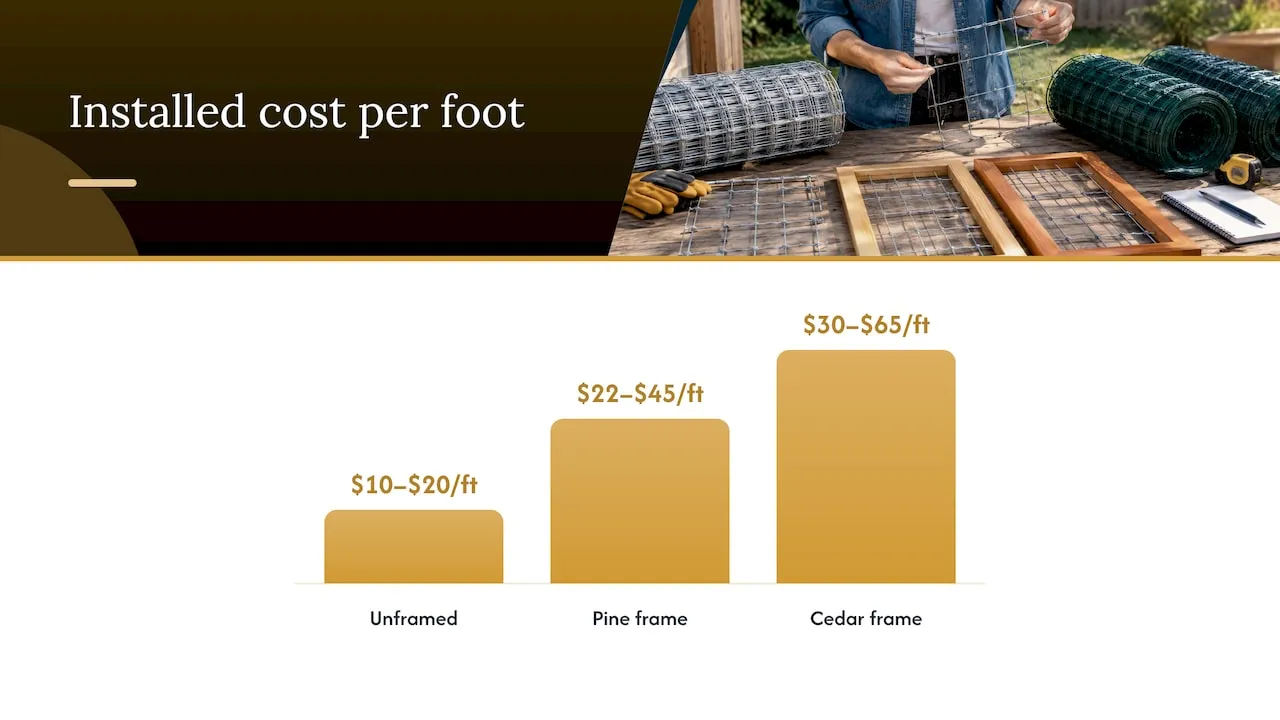
- Installed prices range from $10 to $20 per foot unframed, $22 to $45 with pine, and $30 to $65 with cedar; framing drives the price.
- Set posts in concrete below the local frost line, use galvanized or stainless fasteners, and reinforce gate and corner posts to carry added loads.
- Hot dip galvanized panels may last 20 to 30 years before rust becomes a concern; treat every cut end to limit corrosion and stains.
- A 4 by 4 inch grid may fail deck guard rules; local standards can require a 4 inch sphere test and a 50 pound load.
Table of Contents
- 1. Which hog wire fence ideas fit your property?
- 2. How do you pick the right wire type?
- 3. What are the construction basics?
- 4. How do styling and finishes change the look?
- 5. What does maintenance cost, and where are the limits?
- 6. Our approach to hog wire fence projects
- 7. How can we help with your fence installation?
- FAQ
- Sources
1. Which hog wire fence ideas fit your property?
Picture-ready ideas beat abstract specs, so here is a shortlist you can match to your yard.
- Framed cedar panels with a cap rail: The modern farmhouse classic. Strong curb appeal, and framed fences tend to get approved where HOAs balk at plain wire.
- Unframed rigid panels between posts: The budget pick for side yards and long rural runs.
- Horizontal-board frame with hog wire infill: Contemporary, and it mixes privacy and view since the wire opens the sightline while the boards anchor the design.
- Black powder-coated panels: A sleek, low-visual-weight look that nearly disappears against landscaping.
- Garden trellis sections: Climbing beans, cucumbers, clematis and sweet peas all grab the grid without extra string.
- Raised-bed enclosures: Short panels around beds keep out dogs while letting light through.
- Short framed front-yard borders: A low, decorative edge that marks the property line without walling off the house.
- Custom gates: Match the gate frame to the fence, use heavy-duty hinges and a self-closing latch, and set the gate posts in concrete.
Match the idea to the setting. Framed cedar suits front and street-facing runs, unframed panels suit back lots and utility sides, and trellis sections work beside a vegetable garden or along a sunny wall.
2. How do you pick the right wire type?
The wire you choose sets the look, the stiffness and part of the price.
- Rigid hog or cattle panels: Typically 4 to 6 gauge with 4×4 inch openings. They hold their shape between posts and read as modern.
- Welded or rolled wire: Usually 14 to 16 gauge and cheaper, but it needs tension and a tight frame to avoid sagging.
- Hardware cloth or fine mesh: The choice for rabbits, small predators, or as a safer infill where small openings matter.
Coatings matter as much as gauge. Hot-dip galvanized is the durable standard, electro-galvanized costs less but weathers sooner, and powder coating adds color and extra protection at a higher price.
Practitioner guidance puts installed hog wire fences at $10–$20 per foot unframed, $22–$45 framed in pine, and $30–$65 framed in cedar. The takeaway: framing material, not wire, drives most of your quote.
3. What are the construction basics?
You can brief a contractor, or build it yourself, with these core specs.
- Space posts according to the wire type and installation requirements. Flexible rolled wire needs tension, while rigid panels hold their shape between posts.
- Set posts in concrete and below your local frost line.
- Use galvanized or stainless fasteners. Panel clips or screws with washers hold rigid panels without splitting the wood.
- Upsize gate and corner posts. Use larger-dimension posts set in concrete, and price them as separate line items since they carry the most load.
- Treat the cut ends. Coat any freshly cut wire before it goes into the frame.
Pro Tip: Dry-fit one panel and mark the cuts before you buy a full run, so you waste less wire and fewer cut ends need treating.
Hog wire as deck or guard infill is a different job. Many residential codes require infill that stops a 4-inch sphere and withstands a 50-pound load, and a 4×4 grid opening may be too large to meet that requirement. Our write-up on deck railing options and code rules covers it in more depth. For layout and post details on other fence types, this perimeter fence design guide is a useful companion.
4. How do styling and finishes change the look?
Small choices shift a hog wire fence from rural to refined.
- Cedar vs. treated pine: Cedar is the premium frame and ages to a silvery tone. Pine lowers the upfront cost but needs more attention to finish.
- Cap rails and hidden fasteners: Both clean up the lines, and paired with black powder-coated panels they push the look contemporary.
- Orientation: Horizontal framing reads modern and wide. Vertical framing looks taller and more formal.
- Mixed materials: Combine hog wire bays with solid wood sections where you want measured privacy, such as near a patio.
- HOA friendliness: Framed hog wire is commonly accepted where chain link is not, though you should confirm your own rules first.
Keep the palette simple. One frame color, one wire finish, and a repeating panel width make the fence look planned rather than patched.
5. What does maintenance cost, and where are the limits?
Plan the budget and the upkeep together, because the cheapest wire can become the priciest fix.
- Rust prevention: Rust shows first at cut ends. Treat exposed ends with cold-galvanizing spray or rust-inhibiting paint before framing to avoid streaks running down your posts.
- Longevity: Hot-dip galvanized panels may last 20 to 30 years before rust becomes a concern, while electro-galvanized wire may show weld rust sooner. Powder coating may also help protect the wire.
- Privacy: Hog wire gives none on its own. Add boards, lattice or planting.
- Climbability: The 4×4 grid works like a ladder, so avoid it for pool barriers or choose fine mesh.
Cost reminder: framed cedar runs $30–$65 per foot installed, versus $10–$20 unframed. Spend where it lasts: framing quality and finish coating.
6. Our approach to hog wire fence projects
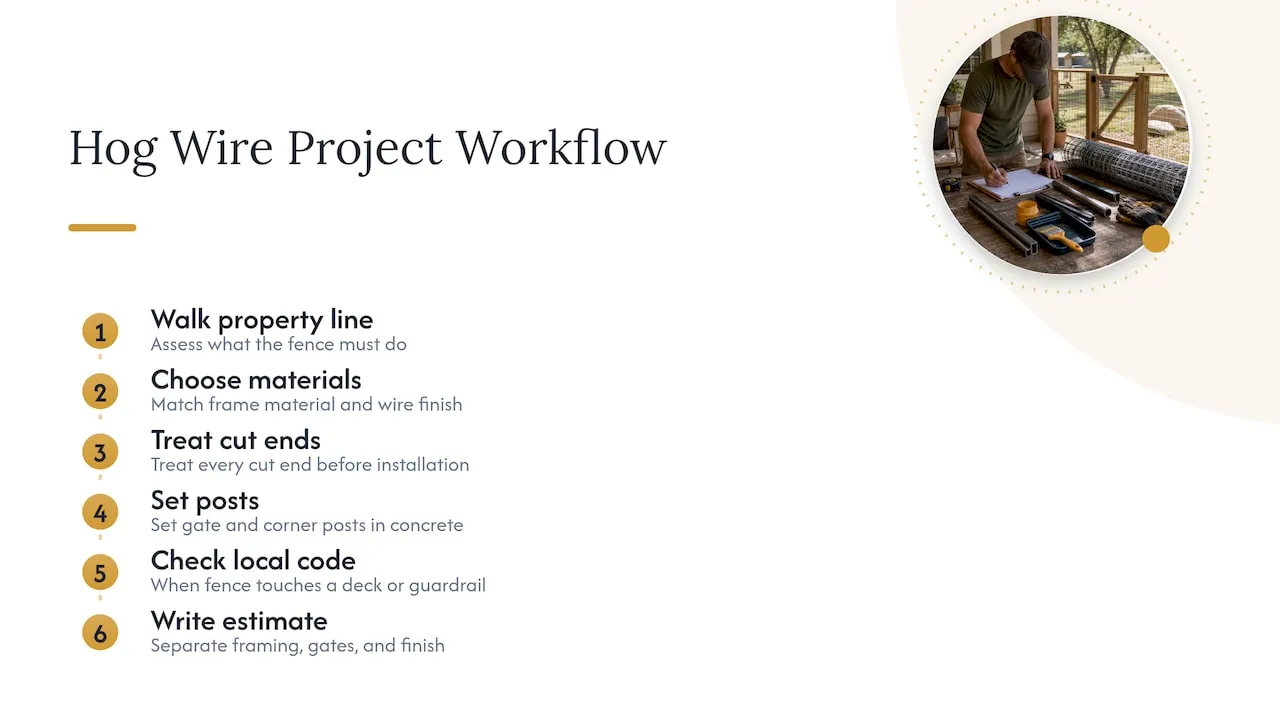
A good hog wire fence is mostly planning. We start by walking the property line, asking what the fence must do, then picking frame material and wire finish to match. Cedar framing with powder-coated panels is our usual choice for visible runs, while galvanized suits utility sides.
On site, we treat every cut end before it goes up, set gate and corner posts in concrete, and check local code any time a fence touches a deck or guardrail. We write estimates clearly so framing, gates and finish are separate lines. If you want a second set of eyes on your layout, we are glad to visit and talk it through. Planning more than a fence? We also handle deck remodeling in Redmond and nearby cities.
— Vlad
7. How can we help with your fence installation?
If you would rather hire than build, our fence installation covers planning, materials, installation and gates, start to finish. The next step is simple: request an estimate, we measure your run, and we schedule a start window that fits your calendar. See our fence installation service for details, or browse our full list of services. Tell us your style and budget, and we will price the framed or unframed option that suits your yard.

FAQ
Is hog wire fencing cheaper than wood?
Often yes, especially unframed. Practitioner guidance lists unframed hog wire at $10–$20 per foot installed, while framed cedar runs $30–$65. A framed cedar hog wire fence can end up costing about as much as a quality wood fence.
What is the recommended height for a hog wire fence?
Common heights run from about 3 feet for borders and garden beds to about 6 feet for full yard fencing. Check local rules, since height limits vary and front-yard fences are often capped lower.
How do you make a fence out of hog wire?
Set posts 6 feet apart, build or buy a frame, then attach rigid panels with clips or screws and washers. Treat cut ends against rust before final assembly.
How far apart should fence posts be for hog wire?
Gate and corner posts should be sturdy and set in concrete.
Sources
- Wisconsin Legislature: Chapter SPS 325 Appendix B
- Wood and Wire Fence: DIY Build, Wire Types & Cost
- Hog Wire Fence: Cost, Framed vs Unframed, Dogs & Rust · FenceLevel
