
Remodeling guide
Painted vs Stained Cabinets: Which Finish Fits Your Kitchen
Choose paint if you want a smooth, solid color and the widest range of looks. Choose stain if you want the wood grain to show and a finish that hides everyday wear. Paint usually costs more up front and asks for more upkeep. Stain costs less and ages more gracefully, but it only looks good on wood that is worth showing.
That is the short answer. The right answer for your kitchen depends on the wood, the light in the room, how hard the space gets used, and how long you plan to stay. This guide walks through each factor, with numbers where we could find them and sources you can check.
TL;DR
- Look: paint gives uniform color and hides the grain. Stain deepens the wood and keeps the grain visible.
- Cost: painted cabinets typically run 10% to 20% more than stained because of the extra prep, primer and coats.
- Wear: stain hides scratches better. Paint shows chips, and touch-ups are more visible.
- Trend: wood finishes have edged past white as the most popular choice in Houzz’s 2026 kitchen data, but paint is still extremely common.
- Best of both: many kitchens pair painted perimeter cabinets with a stained island.
Table of Contents
- What actually separates paint from stain
- Look and style
- Cost: which is cheaper?
- Durability: are painted cabinets durable?
- Maintenance day to day
- Resale and “outdated” worries
- Why not both?
- A simple way to decide
- Perspective: what we tell Redmond homeowners
- Planning cabinets as part of a remodel
- FAQ
- Sources
What actually separates paint from stain
Stain is a thin, translucent color that soaks into the wood. The grain and texture stay visible, and the finish is a clear protective coat over the color. Paint is an opaque film that sits on the surface. It covers the grain completely, and it is built up in layers: primer, color coats and a protective topcoat.
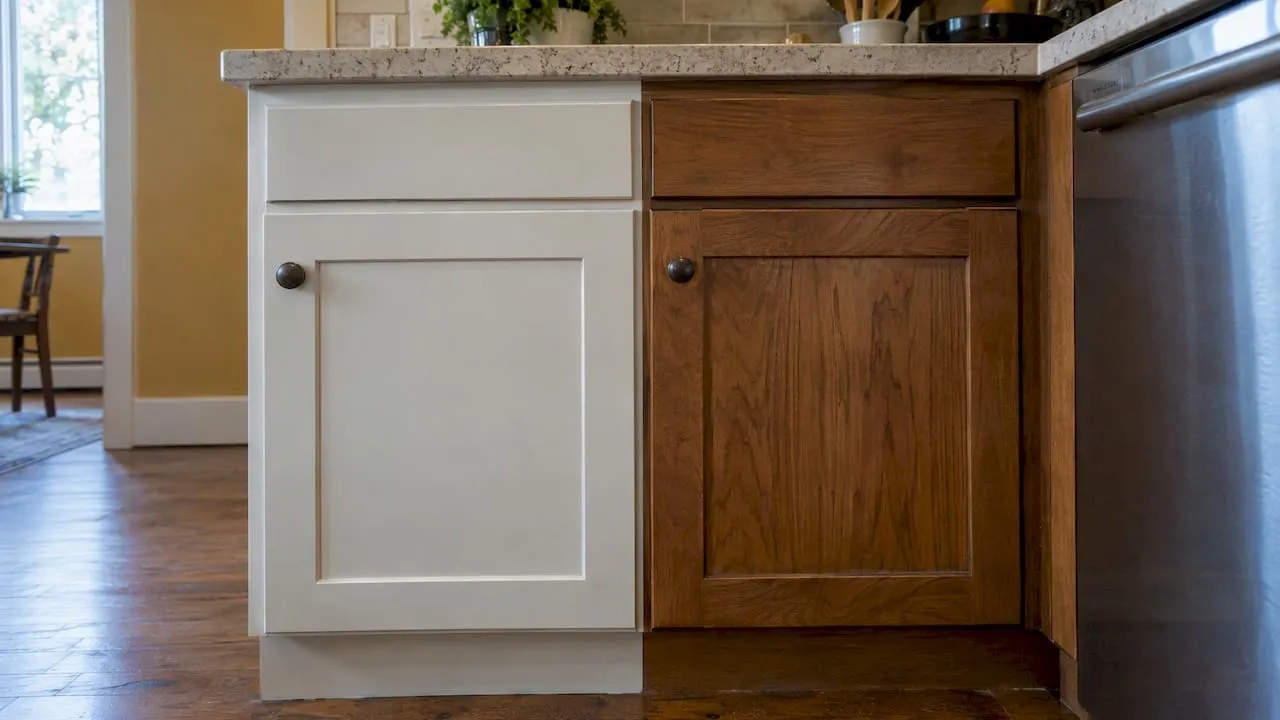
This difference drives almost everything else. Because paint is a film, it can chip and it can crack at the joints. Because stain lives in the wood, it can’t hide a poor board. Every knot, mineral streak and color difference between boards will show.
Look and style
When paint wins
Paint is the choice when you want a specific color: crisp white, soft greige, deep green, navy. It also suits flat shaker doors and clean-lined, modern kitchens, where a smooth, flawless surface is the point. If you dislike the small character marks that natural wood carries, paint is the safer pick.
Paint also helps with a practical problem. Some woods take paint better than stain. Poplar, for example, performs best painted rather than stained, and many paint-grade cabinets use it for that reason.
When stain wins
Stain suits oak, walnut, cherry and other woods with grain worth looking at. It brings warmth to a room, which matters in homes with cool gray tile or white counters. In the Pacific Northwest, where many Redmond homes get long gray winters, a warm wood tone can make a kitchen feel brighter than a cold white one does.
What is trending in 2026
The 2026 Houzz Kitchen Trends Report, as summarized by one cabinet retailer, shows wood cabinets at 29% of renovators’ choices against 28% for white. Medium wood tones led at 15%. Wood gained 6 points year over year, and white fell 5.
Don’t over-read that. It is a one-point gap, and paint remains one of the most common finishes. If you are weighing colors specifically, this overview of kitchen cabinet color trends covers what is popular right now. Treat trends as a tiebreaker. A kitchen you will live in for ten years should match your taste, not a report.
Cost: which is cheaper?
Stain is usually cheaper. Painting is a longer process: one source describes roughly eight steps for paint against three for stain, and puts the premium for paint at 10% to 20%. The same page’s key takeaways say 15% to 20%, so expect a range rather than a fixed figure.
Where the money goes:
| Cost driver | Painted | Stained |
|---|---|---|
| Surface prep | Sanding, filling, sometimes caulking joints | Sanding, light prep |
| Coats | Primer, two color coats, topcoat | Stain, clear topcoat |
| Labor time | Longer | Shorter |
| Wood quality needed | Paint-grade can be fine | Needs attractive, matching grain |
That last row cuts the other way. Stain-grade wood costs more than paint-grade wood, so the gap can narrow or flip once you price the boards. Always compare complete quotes for the same door style, not finish prices in isolation. If you are building a full budget, our kitchen remodel budget breakdown shows how to split a project into line items so the cabinet finish is one visible choice, not a surprise.
Durability: are painted cabinets durable?
They can be, and the finish quality matters more than the color. Two points are worth knowing.
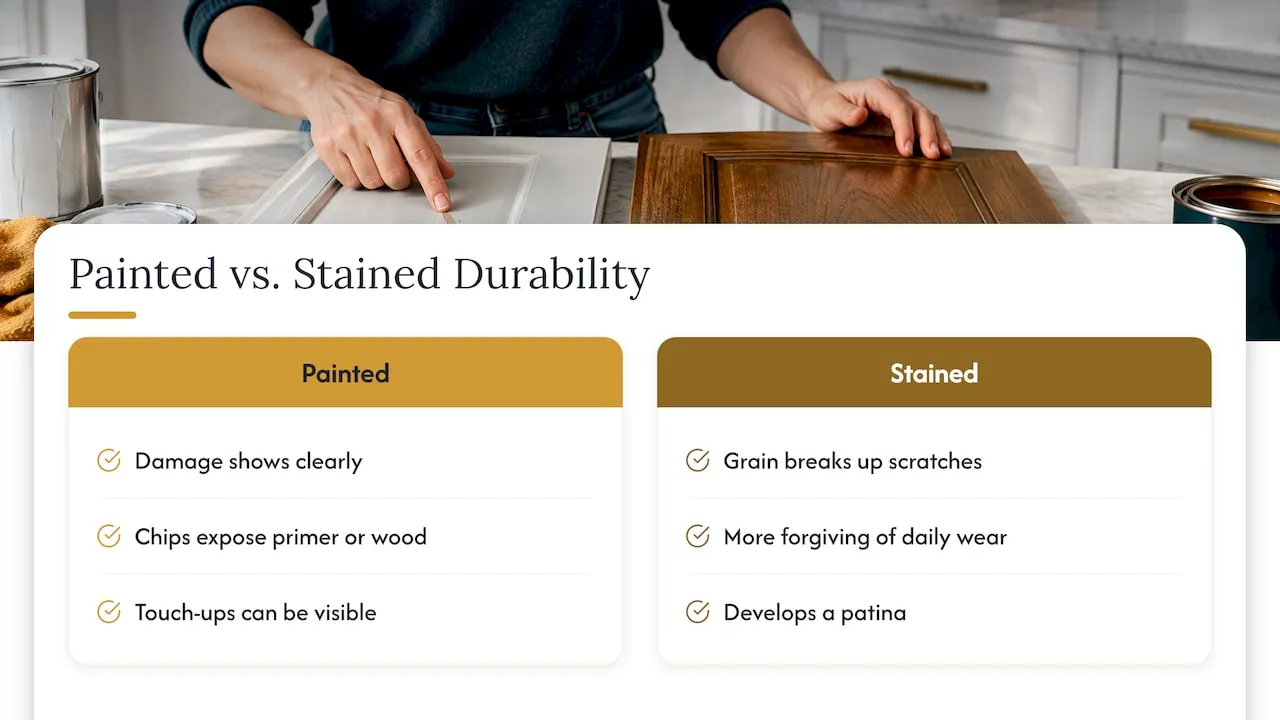
Wear and chips. Painted cabinets show damage more clearly. A chip often exposes primer or bare wood, and a touch-up can be visible next to the original paint. Stained cabinets are more forgiving of daily wear because the grain breaks up scratches. Over time, stained wood tends to develop a patina rather than looking damaged.
The finish, not the species. One cabinet industry guide notes that durability depends more on the applied finish than on the wood species. A well-finished poplar door can outperform a poorly finished maple or oak one. A catalyzed conversion varnish that meets the standard is the kind of finish it points to.
That standard is ANSI/KCMA A161.1, a performance and construction standard for factory-assembled kitchen and vanity cabinets. It covers how finishes hold up, and it deliberately does not dictate appearance or materials. If you buy new cabinets, ask whether the line is certified. For existing cabinets that are refinished on site, ask the installer which products they use and how many coats go on.
Moisture and joints
Kitchens have steam, spills and temperature swings, and Western Washington is damp for much of the year. Paint can protect wood from decay, but only while its moisture-resistant film stays intact at the joints. Wood naturally expands and contracts, and that can crack the paint line. Once it cracks, moisture can get in. So with painted cabinets, check the seams around the sink and dishwasher each year, and touch them up early. This is the most overlooked part of cabinet care.
Maintenance day to day
- Painted: wipe with a soft cloth and mild soap. Avoid abrasive pads. Expect to touch up high-contact spots such as edges near the handles. Keep a small jar of the exact color.
- Stained: wipe the same way. Small scratches blend into the grain. Deep gouges can often be dealt with using a matching touch-up product, but color matching on aged wood takes some skill.
Neither finish is maintenance-free. Painted cabinets ask for more attention if you want them to look perfect. Stained ones are more relaxed about it.
Resale and “outdated” worries
Neither is outdated by nature. What dates a kitchen is a particular tone or door style, such as orange-yellow oak with arched panels, or high-gloss colors of a past decade. Light and mid-tone woods in a simple door style look current, and so do clean painted neutrals. If you may sell within a few years, pick a restrained color and spend your boldness on hardware, lighting or the backsplash. Our guide to cabinet hardware placement is useful here, since pulls are the easiest way to refresh either finish later.
Why not both?
The current design direction is more about tactile warmth and natural texture than one color. Designers often use wood grain as an accent, such as a stained island, to balance neutral or painted perimeter cabinets. This is also a sensible budget move: you get the warmth of wood where people see it most, and the easy-to-update look of paint on the long runs. If you are planning an island, check the clearances first with our kitchen island sizing guide.
A simple way to decide
- Look at the wood. If it has beautiful, consistent grain or you are buying stain-grade doors, stain is worth considering. If the boards are mixed or you are using paint-grade material, go with paint.
- Check your light. North-facing or dim kitchens often feel better with light paint or a warm medium wood. Very dark stains can swallow a small room.
- Be honest about upkeep. If you will not touch up chips, stain is the calmer choice.
- Think about the household. Young kids, rentals or heavy daily cooking favor stain’s forgiveness, or a hard factory-applied finish in either type.
- Compare the same-scope quotes. Price paint and stain on the same doors and ask what is in each coat system.
- Look at samples in your own kitchen. Hold large samples against your counters and floors, in morning and evening light.
Perspective: what we tell Redmond homeowners
We plan kitchens for a living, and the finish debate usually starts too early. People choose paint or stain before they have decided on layout, counters, flooring and lighting. We would rather fix those first, because the finish should respond to the room, not the other way around.
Our advice is to choose the finish last among the big decisions and test it against the real materials. A warm stain can fight with a cool floor. A bright white can look flat next to a busy counter. Material guidance and planning are what we put into every project, so that these choices fit together instead of being made one at a time.
And be honest about upkeep. Paint is lovely when it is fresh, but it asks for care. If that is not you, there is no shame in choosing stain, or in using paint where it is protected and wood where it is touched most.
— Vlad
Planning cabinets as part of a remodel
If you are replacing cabinets, the finish is one line in a larger plan. We handle kitchen, bathroom and whole-home remodeling in Redmond, WA, with planning, material guidance and skilled craftsmanship, and with free estimates and no-pressure pricing. If new flooring is part of the project, our flooring and installation services cover hardwood, luxury vinyl plank, laminate, tile and carpet, including floor removal. For more reading as you plan, see our home remodeling insights, or the piece on taking cabinets to the ceiling.
FAQ
Is it cheaper to have cabinets stained or painted?
Stained is usually cheaper. Painting involves more prep, primer and coats, and one industry source puts the premium at 10% to 20%. The gap can shrink if stain-grade wood costs more than paint-grade wood, so compare complete quotes.
Are painted cabinets durable?
Yes, if the finish is applied well and the joints are maintained. Paint shows chips more than stain does, so expect touch-ups. A hard factory finish that meets ANSI/KCMA A161.1 is a good benchmark for new cabinets.
Are stained cabinets outdated?
No. Wood finishes are rising in popularity, and in Houzz’s 2026 data they slightly outpaced white. What looks dated is a specific orange-toned oak or heavy door style, not stain itself.
Can I paint cabinets that are stained now?
Yes, in most cases, with proper sanding and a primer made for the surface. Going from paint back to stain is much harder, because the paint has to be fully removed first. Decide with that one-way street in mind.
Sources
- Painted vs. Stained Cabinets: Pros, Cons, and Cost Comparison
- Kitchen Cabinet Trends 2026: Most Popular Styles and Colors
- Is Poplar Good for Cabinets? What Homeowners Need to Know
- KCMA A161.1-2022
- Build Green: Wood Can Last for Centuries (USDA Forest Products Laboratory)
- Stained vs. Painted Kitchen Cabinets
