
Remodeling guide
Avoid Costly Plumbing Moves: Small Bathroom Remodels $3,000–$18,000+
A small bathroom remodel typically runs $3,000 to $8,000 for a cosmetic refresh, $8,000 to $18,000 for a mid-range job, and $18,000 or more for a premium overhaul with custom finishes. The single biggest cost lever is your plumbing layout: keep the toilet, sink, and shower where they already sit, and you sidestep the expense that blows up more budgets than any tile choice ever will. Budget $115 to $300 per square foot, and hold back 10% to 20% for surprises.
TL;DR:
- Most small bathroom remodels fall between $8,000 and $18,000, with costs rising significantly when plumbing layouts or structural changes are involved.
- Labor costs typically account for 40% to 60% of the total budget and vary greatly depending on region, trade complexity, and tile pattern choices.
- The scope of work determines the tier: cosmetic refresh for about $3,000 to $8,000, mid-range around $8,000 to $18,000, and full renovation starting at $18,000 with layout or plumbing changes.
- Fixed costs like minimum labor charges, permits, and hidden repairs make smaller rooms more expensive per square foot compared to larger bathrooms.
- Setting aside a contingency fund of 10% to 20% and maintaining a clear scope prevent budget overruns driven by unexpected behind-wall issues.
Table of Contents
- How Much Does a Small Bathroom Remodel Cost?
- What Does Each Part of a Bathroom Remodel Actually Cost?
- Cosmetic Refresh, Mid-Range, or Premium: Which Fits Your Bathroom?
- What Does It Cost by Room Size?
- How Do You Budget for a Small Bathroom Remodel?
- How Long Does a Small Bathroom Remodel Take, and What Could Go Wrong?
- What Should You Ask a Contractor Before You Sign?
- How Solution Team Remodeling Estimates Small Bathroom Projects
- What Homeowners Get Wrong About Bathroom Remodel Costs
- Get a Free Estimate for Your Small Bathroom Remodel
- Where This Cost Data Comes From
- Sources
- FAQ
How Much Does a Small Bathroom Remodel Cost?
Three project types cover almost every small bathroom job, and knowing which one you’re actually planning saves you from sticker shock halfway through demo. A cosmetic refresh swaps out surfaces and fixtures without touching plumbing or layout. A mid-range remodel usually adds a new vanity, updated tile work, and possibly a new tub-to-shower conversion. A full renovation reconfigures the room, which almost always means moving at least one plumbing line.
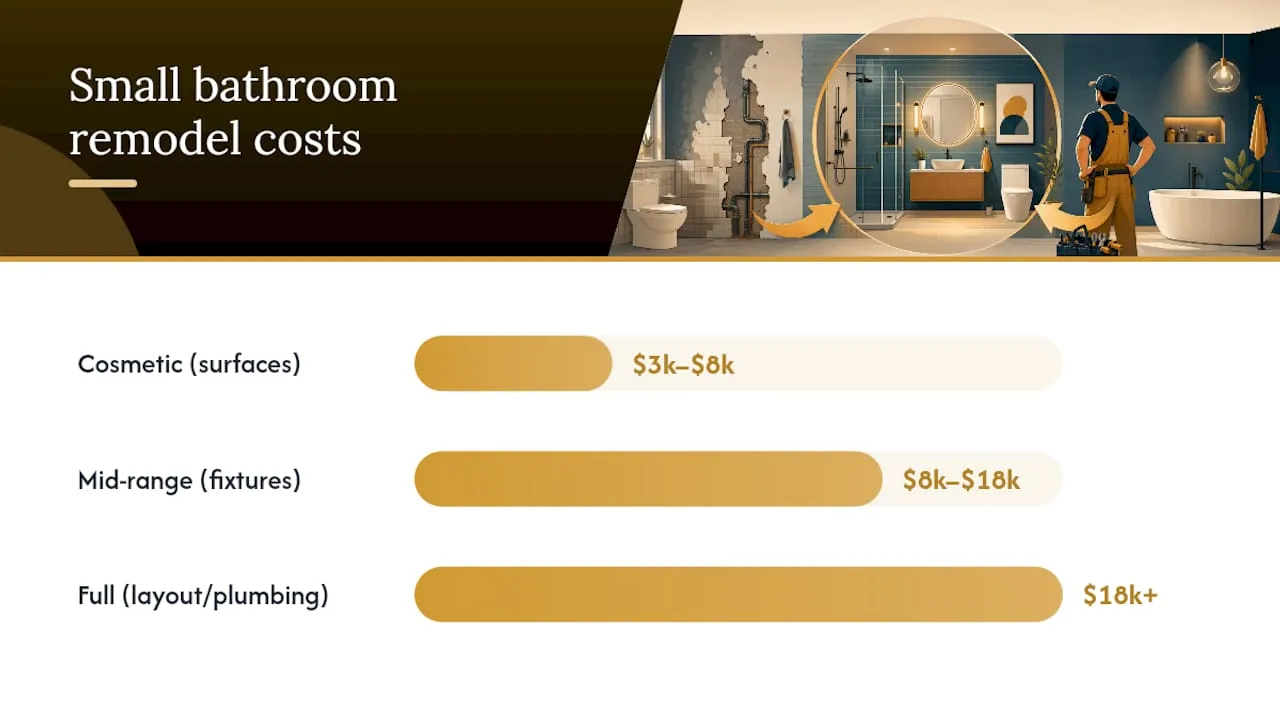
Cosmetic refresh ($3,000–$8,000): new paint, a fresh toilet, updated lighting, a new mirror and vanity faucet, maybe a reglazed tub. Nothing structural changes. This is the fastest path to a bathroom that no longer looks like it belongs to the previous decade.
Mid-range remodel ($8,000–$18,000): this is where most small bathroom projects actually land. A 2026 breakdown from TrustedHomeQuotes puts the national average for this tier at roughly $6,500 to $7,000, though that figure sits on the low end for homeowners adding tile work or upgraded fixtures. Expect a new vanity, new flooring, retiled shower walls, updated lighting, and possibly a new toilet and faucet set.
Full renovation ($18,000+): layout changes, moved plumbing, custom tile, built-in niches, heated floors, frameless glass. This tier is where a small bathroom can rival the per-square-foot cost of a kitchen.
Here’s what real budgets tend to buy:
- A $5,000 job usually means new paint, a new toilet, a vanity swap, and updated lighting fixtures, with the existing tub and tile staying put.
- A $10,000 job typically covers a new vanity, new flooring, a retiled shower surround, a new toilet, and updated electrical fixtures, all within the existing footprint.
- A $15,000 job often adds a walk-in shower conversion, custom tile work, better-grade fixtures, and sometimes a small layout tweak that doesn’t require moving supply lines.
This Old House’s 2026 pricing guide confirms this same tiered structure, with premium jobs pushing past $18,000 once custom cabinetry or natural stone enters the picture. The gap between tiers isn’t really about square footage. It’s about how many trades touch the room and how much of what’s behind the walls gets disturbed.
What Does Each Part of a Bathroom Remodel Actually Cost?
Labor eats the biggest share of almost every bathroom budget. TrustedHomeQuotes puts labor at roughly 40% to 60% of total project cost, and where you land in that range depends on your region, how many trades you need, and how complicated your tile pattern is. A straightforward subway tile job in a low cost-of-living market sits at the bottom of that range. A herringbone pattern with a mosaic accent strip in a high labor-cost city pushes toward the top.
Labor rates vary more than most homeowners expect. Plumbers, electricians, and tile setters all price differently by region, and Bureau of Labor Statistics wage data shows why two contractors in different cities can quote wildly different totals for what looks like the same job on paper.
Materials and fixtures make up the rest, and here’s where a small room works in your favor: you need less of everything, so a higher-grade finish stays affordable.
- Vanity: $200 (stock, big-box) to $2,500+ (custom, solid wood with stone top)
- Toilet: $150 to $800, depending on comfort height and flush technology
- Shower or tub: $500 for a basic acrylic tub to $4,000+ for a tiled walk-in shower with glass enclosure
- Tile: $1 to $15+ per square foot for material alone, before labor
- Flooring: $3 to $12 per square foot for porcelain tile or luxury vinyl plank
- Permits: $150 to $1,000, depending on your municipality and scope
- Demolition and disposal: $500 to $2,000
- Hidden repairs (subfloor rot, mold): $500 to $4,000 when they surface
One decision point homeowners underestimate: prefab shower units versus fully tiled showers. A prefab acrylic or fiberglass shower kit costs less upfront and installs in a day, typically landing between $1,500 and $4,000 installed. A tiled shower with a custom pan costs more in labor because it requires waterproofing membrane work, mortar bed setting, and grout curing time, often pushing the total to $3,000 to $8,000 for the shower alone. Tile wins on looks and resale appeal. Prefab wins on speed and budget certainty.
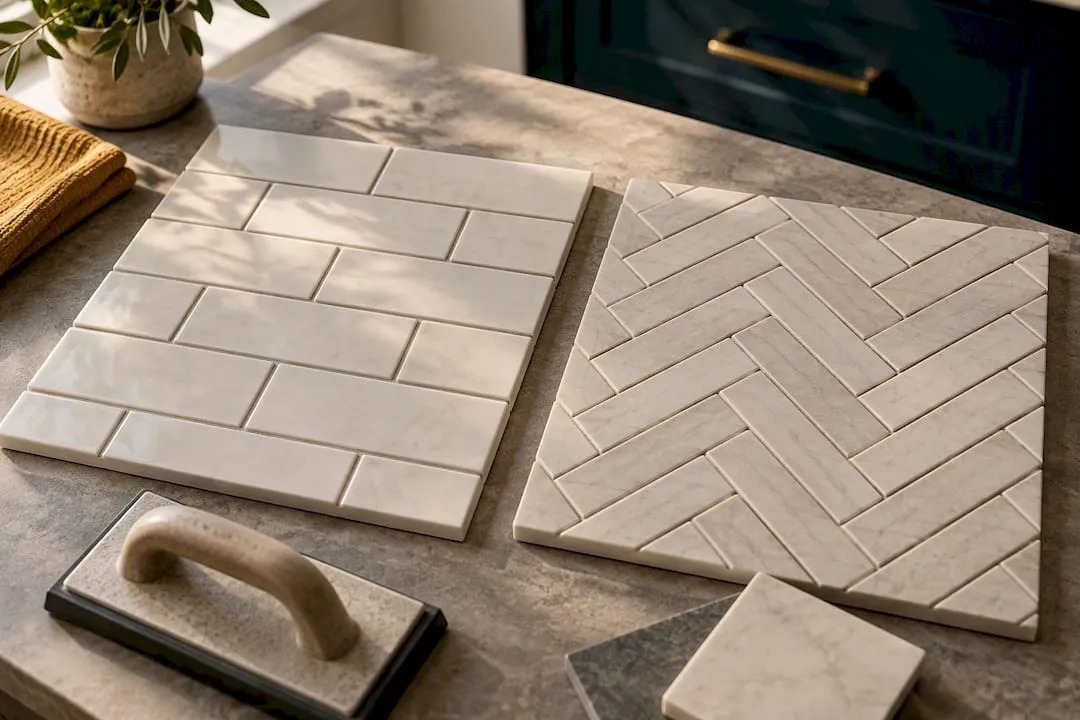
Tile complexity deserves its own line item on any quote you receive. A basic running-bond layout with standard grout lines installs quickly. A herringbone or hexagon pattern with narrow grout joints can more than double the labor hours on that portion of the job, which is why a good estimator lists tile labor separately instead of folding it into a single “finishes” number.
Cosmetic Refresh, Mid-Range, or Premium: Which Fits Your Bathroom?
Picking the right tier before you call a contractor keeps your conversations focused and your quotes comparable.
Cosmetic refresh works if your layout already functions well and nothing is failing structurally. You’re updating the look, not the bones. Scope typically includes: new paint, updated lighting and mirror, a new faucet and toilet, and possibly a reglazed tub or new shower curtain hardware. Resale impact is modest but immediate. Buyers notice a fresh, clean bathroom even if the footprint never changes.
Mid-range remodel is the sweet spot for most homeowners who want a real upgrade without touching plumbing lines. Scope includes a new vanity, new flooring, retiled shower or tub surround, updated electrical (better lighting, maybe a fan upgrade), and a new toilet. This tier delivers the strongest return relative to spend, since buyers and appraisers both respond to updated tile and fixtures without requiring you to justify a layout change.
Premium renovation kicks in once you touch the plumbing, expand the footprint, or bring in custom cabinetry and stone. Three triggers push a project into this tier almost every time: relocating a toilet or shower drain, converting a tub to a curbless walk-in shower, or specifying custom tile patterns and cabinetry. Each of these adds thousands beyond what the surface materials alone would cost, because they involve trades stacking on top of each other. A plumber has to rough in new lines, an electrician may need to relocate outlets to code, and the tile setter needs a longer schedule for waterproofing and curing.
Resale-wise, premium finishes rarely return dollar-for-dollar in a small bathroom the way a kitchen remodel does. The value shows up more in buyer perception and faster time-on-market than in a direct price bump. If you’re remodeling to sell within a year or two, a well-executed mid-range job usually makes more financial sense than a premium one.
What Does It Cost by Room Size?
Small bathrooms don’t scale down predictably, which surprises a lot of homeowners pricing out a job for the first time. A 5x8 room doesn’t cost half of what a 10x8 room costs, because a chunk of your bill is fixed regardless of square footage.
These figures line up with the $115 to $300 per square foot range Modernize reports for 2026 small bathroom projects, with the lower end reflecting a cosmetic refresh and the upper end reflecting a mid-range remodel with tile and fixture upgrades.
Notice something about that per-square-foot math: the smallest room in the table often costs more per square foot than the largest one. That’s not a pricing error. Trade mobilization, minimum job charges, and setup time don’t shrink just because the room is small. A plumber charges close to the same amount to rough in a shower valve in a 30-square-foot bathroom as in a 48-square-foot one. Spread that fixed cost over fewer square feet, and your per-foot number climbs.
When you request a quote, give the contractor your exact dimensions and which fixtures you’re keeping versus replacing. A contractor pricing a 5x6 remodel needs to know upfront whether the toilet and shower stay in place, because that single detail can shift the estimate by thousands.
How Do You Budget for a Small Bathroom Remodel?
Every experienced remodeler will tell you the same thing: the project that stays on budget is the one that planned for not staying on budget.
- Set aside 10% to 20% of your total budget as a contingency fund, held separately and untouched unless something behind the walls surprises you. This Old House recommends this same range for small bathroom projects specifically, since older homes routinely hide subfloor damage or outdated wiring behind a single removed tile.
- Spend on what you touch and see every day. The shower, the vanity, and the flooring get the most attention from anyone using the room. Put your money there first.
- Save on what blends into the background. A standard-height toilet from a reputable brand performs identically to a designer version costing three times as much. The same logic applies to cabinet hardware and light switch plates.
- Refinish before you replace. A cast iron tub in decent structural shape can be reglazed for a few hundred dollars instead of replaced for two thousand. The same goes for solid wood vanity cabinets with dated finishes.
- Choose a simpler tile layout to cut labor hours. A straight-set pattern with standard 3/16 inch grout lines installs faster than a diagonal or herringbone layout, and the savings show up directly in your labor line.
Pro Tip: Ask your contractor to hold a fixed-dollar allowance for tile and fixtures rather than specifying an exact product upfront. This keeps your written estimate accurate even if you upgrade your tile choice later, because the allowance absorbs the difference instead of triggering a change order that reopens the whole contract.
How Long Does a Small Bathroom Remodel Take, and What Could Go Wrong?
A cosmetic refresh typically wraps in 3 to 5 days. A mid-range remodel runs 2 to 3 weeks once demo, plumbing, tile setting, and grout curing are all factored in. A full renovation with layout changes can stretch to 4 to 6 weeks, especially if permitting adds a waiting period before work starts.
Permits aren’t always required for a straightforward fixture swap, but they typically are required once you move plumbing, add electrical circuits, or alter the room’s structure. Permit costs generally fall between $150 and $1,000 depending on your municipality, and skipping a required permit can cause real problems when you sell the house and a buyer’s inspector flags unpermitted work.
The surprises that blow up budgets tend to cluster around three issues:
- Water damage and subfloor rot, often discovered once old tile or a tub surround comes out, typically adding $500 to $2,000 in repair costs.
- Mold behind tile or under flooring, which can range from a simple treatment to a $4,000 remediation job if it has spread into wall cavities.
- Asbestos in older flooring or popcorn ceilings, common in homes built before the 1980s, which requires professional abatement before any demo can continue.
None of these are guaranteed to happen. But in homes older than 30 years, at least one of them shows up often enough that your contingency fund exists specifically for this moment.
What Should You Ask a Contractor Before You Sign?
Getting three quotes only helps if those quotes are actually comparable, and that starts with asking every contractor the same set of questions.
- Are you licensed and insured in this state, and can I see proof? A legitimate contractor produces this without hesitation.
- Can you provide references from at least two recent small bathroom projects? Call them. Ask specifically whether the final cost matched the original quote.
- What is your policy on change orders? Get this in writing before signing anything.
- What does your payment schedule look like? A deposit of 10% to 30% is standard; anything demanding half or more upfront is a warning sign.
- What is your estimated timeline, and what happens if it slips?
To compare quotes fairly, make sure each one itemizes the same categories: demolition, plumbing, electrical, tile labor separate from tile materials, fixtures, and permits. A quote that bundles everything into one lump sum is nearly impossible to compare against a competitor’s itemized version, and it often hides where the real cost is concentrated.
Watch for these red flags:
- A demand for full payment before work begins.
- A scope of work that’s vague on materials or square footage.
- No written contract, or a contract that skips start and completion dates.
- Pricing that comes in dramatically lower than every other bid with no clear explanation.
If a contractor can’t answer the licensing question directly or gets defensive about references, that’s information worth having before you sign anything.
How Solution Team Remodeling Estimates Small Bathroom Projects
A reliable estimate starts with a site visit, not a phone quote. Our process at Solution Team Remodeling begins with a measured takeoff of the actual room, because square footage alone doesn’t tell you what a plumbing rough-in or tile substrate will require. From there, we set clear allowances for fixtures and finishes and put every assumption in writing before demo ever starts.
That written scope is what prevents the change-order creep that inflates so many bathroom budgets. When a homeowner knows exactly what allowance is held for tile versus what’s held for the vanity, an upgrade decision midway through the project doesn’t turn into a budget argument. It’s simply a documented adjustment against a number both sides already agreed on. Phasing matters too: keeping plumbing and electrical work sequenced properly with tile and finish work avoids the rework that happens when trades get out of order. Homeowners across Redmond and the surrounding area work with our team specifically because that upfront clarity means fewer surprises once the walls are open.
What Homeowners Get Wrong About Bathroom Remodel Costs
The conventional advice you’ll find everywhere focuses on square footage and finish level, and both matter. But the variable that actually determines whether your project finishes on budget is how disciplined your scope stays once demo reveals what’s really behind the wall.
Most overruns don’t come from choosing nicer tile. They come from a plumbing line that has to move six inches because of what the contractor found, or a vanity swap that reveals rot nobody could see beforehand. The homeowners who come in near their original number aren’t the ones who picked the cheapest materials.
If you take one thing from this guide, let it be this: interview contractors on their change-order process before you interview them on their tile selection. The finish choices are the fun part. The written scope is what actually protects your budget.
— Vlad
Get a Free Estimate for Your Small Bathroom Remodel
A reliable remodeling service gives homeowners a detailed written scope and transparent pricing before any demo starts, with no pressure to upgrade beyond what fits their budget.
Our team handles the full range of what a small bathroom project needs, from tile installation and plumbing coordination to flooring and finish carpentry, all under one organized schedule instead of juggling separate subcontractors yourself. A free estimate includes a measured site visit, a look at comparable projects in our renovation portfolio, and a written cost breakdown you can actually compare against other quotes line by line. If you’re in Redmond, Bellevue, or a nearby community, our local service area page has more on what to expect from our process. North of the Eastside, see our bathroom remodeling in Everett page.
Ready to see what your bathroom would actually cost? Request your free estimate and get a written scope you can plan around instead of guessing.
Where This Cost Data Comes From
These figures draw on published pricing guides and government wage data rather than a single contractor’s opinion, which matters when you’re trying to sanity-check a quote.
- This Old House provides the core cost tiers and contingency guidance used throughout this guide.
- Modernize supplies per-square-foot ranges and size-based cost examples.
- TrustedHomeQuotes offers a 2026 line-item breakdown and the labor percentage figures cited here.
- The Bureau of Labor Statistics tracks regional wage data for plumbers, electricians, and tile setters, explaining why labor costs vary by market.
- HomeGuide breaks down powder room and half-bath costs separately from full bathroom remodels.
Sources
- Small Bathroom Remodel Cost: 2026 Price Guide
- 2026 Small Bathroom Remodel Costs, Budgeting Tips & Types
- Small Bathroom Remodel Cost in 2026: Full Breakdown
- Bureau of Labor Statistics — Occupational Employment and Wage Statistics
FAQ
Can You Redo a Bathroom for $5,000?
Yes, but only as a cosmetic refresh: new paint, a new toilet, an updated vanity, and fresh lighting, all within the existing layout and plumbing. You won’t get new tile work or a shower conversion at this budget, since full retiling and fixture upgrades typically start closer to $8,000.
Is $10,000 Enough to Remodel a Bathroom?
Yes, $10,000 comfortably covers a mid-range small bathroom remodel, which TrustedHomeQuotes reports averages around $6,500 to $7,000 nationally for this tier. That budget typically buys a new vanity, updated flooring, a retiled shower surround, and new fixtures, as long as the plumbing stays in its current location.
What Does a $10,000 Bathroom Remodel Look Like?
A $10,000 remodel usually includes a new vanity, new flooring, a retiled shower or tub surround, a new toilet, and updated lighting and electrical fixtures. It rarely includes moving plumbing lines or expanding the room’s footprint, since either of those additions pushes the total higher.
What Is the 30% Rule in Remodeling?
The 30% rule suggests spending no more than roughly 30% of your total remodeling budget on labor alone before materials and fixtures are factored in, though in practice labor for a small bathroom often runs 40% to 60% of the total project cost. Homeowners planning a bathroom remodel should treat this as a rough budgeting guideline rather than a fixed formula, since actual splits vary by region and project complexity.
What’s the Real Difference Between a Powder Room Remodel and a Small Bathroom Remodel?
A powder room remodel skips shower and tub costs entirely, which keeps total costs lower, often landing between $1,500 and $10,000 depending on finish level. A small full bathroom includes a shower or tub, which adds waterproofing, tile, and plumbing work that a half-bath never requires.
