
Remodeling guide
Kitchen Design Trends 2026: What Redmond Homeowners Are Choosing
The biggest kitchen design shift of 2026 is warmth. Wood cabinets have overtaken white, layouts are being rearranged inside existing walls, and technology is turning quiet and useful instead of flashy. If you are planning a remodel in Redmond, the useful question is which of these trends fit your house, your budget and the next 15 years of your life. This guide covers the kitchen trends worth your money, the bathroom trends that go with them, and what they mean on a Redmond project.
TL;DR
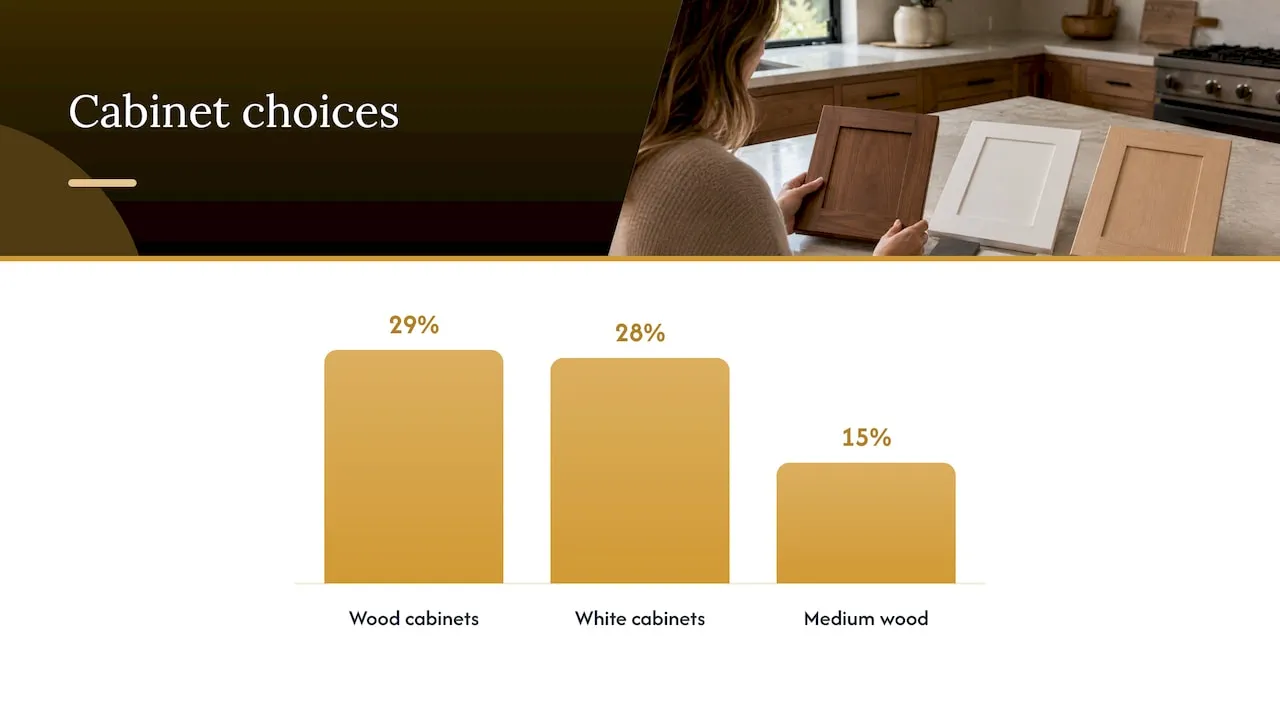
- Warm wood cabinets now edge out white: 29% versus 28% of renovating homeowners in the 2026 U.S. Houzz Kitchen Trends Study.
- Layouts are shifting toward defined zones, and most layout changes stay inside the existing footprint, which also keeps permit and energy-code costs down.
- Aging-in-place details (drawers, pullouts, better task lighting) are cheapest when they are specified in the first cabinet order.
- In the bathroom, expect timeless styling, natural materials, fewer grout lines and quiet smart features.
- A mid-range Redmond kitchen remodel with no structural changes typically runs $58,000 to $110,000, according to a local cost guide.
Table of Contents
- Warm wood replaces white as the leading cabinet choice
- Color: neutrals stay, and green is no longer the headline
- Natural stone, quartz and textured surfaces
- Defined zones instead of one big open room
- Storage and aging-in-place planning
- Technology that disappears into the house
- Bathroom trends that pair with the kitchen
- What a 2026 kitchen remodel costs in Redmond
- Our perspective: plan the kitchen for the next 15 years
- Plan your Redmond kitchen with us
- FAQ
- Sources
Warm wood replaces white as the leading cabinet choice
For years, white cabinets were the safe answer. According to the 2026 Houzz study, wood cabinets now lead with 29% of renovating homeowners, against 28% for white. Medium wood tones are the single most popular choice, at 15%. The study surveyed nearly 1,800 renovating homeowners, so this reflects what people are actually buying, not only what magazines photograph.
Designers are saying the same thing. The NKBA’s 2026 kitchen report, as summarized by The Kitchn, found 59% of surveyed design pros pointing to wood-grain finishes replacing painted cabinets, with white oak named by 51%.
What this means in a Pacific Northwest house:
- Walnut and medium oak suit the region’s gray winters. They add warmth that white cannot, especially in kitchens with limited natural light.
- Two-tone schemes are an easy entry point. Wood on the island or lowers, a quieter painted finish on the uppers.
- Budget for the upgrade. One New Jersey installer’s guide puts wood at $3,500 to $8,500 more than painted for a typical kitchen. Pricing in Redmond will differ, so treat that as a rough scale, not a quote.
If you love white, keep it. Trends say what is rising, not what will make your kitchen worse. A classic white kitchen with good lighting and warm hardware still looks right. The point is that you now have a mainstream alternative.
Color: neutrals stay, and green is no longer the headline
The NKBA survey says 96% of design pros see neutrals as the most popular palette, with greens at 86% and blues at 78%, according to The Kitchn’s summary. Green has had a long run as the bold choice, and the report suggests the market is moving toward wood and natural finishes instead.
Our practical advice on color:
- Put the permanent, expensive things (cabinet boxes, counters, flooring) in neutrals and wood.
- Put the bold color where it is cheap to change: paint, a pantry door, stools, a backsplash accent.
- Look at samples in your own kitchen at morning, noon and evening. Redmond light changes a lot by season.
Natural stone, quartz and textured surfaces
Countertops and backsplashes are moving toward natural materials. The same NKBA findings put quartz at 62% and natural quartzite at 61% for countertops and backsplashes, with marble and granite losing ground. Textured tile and stone are also showing up as a way to make a kitchen feel layered instead of clinical.
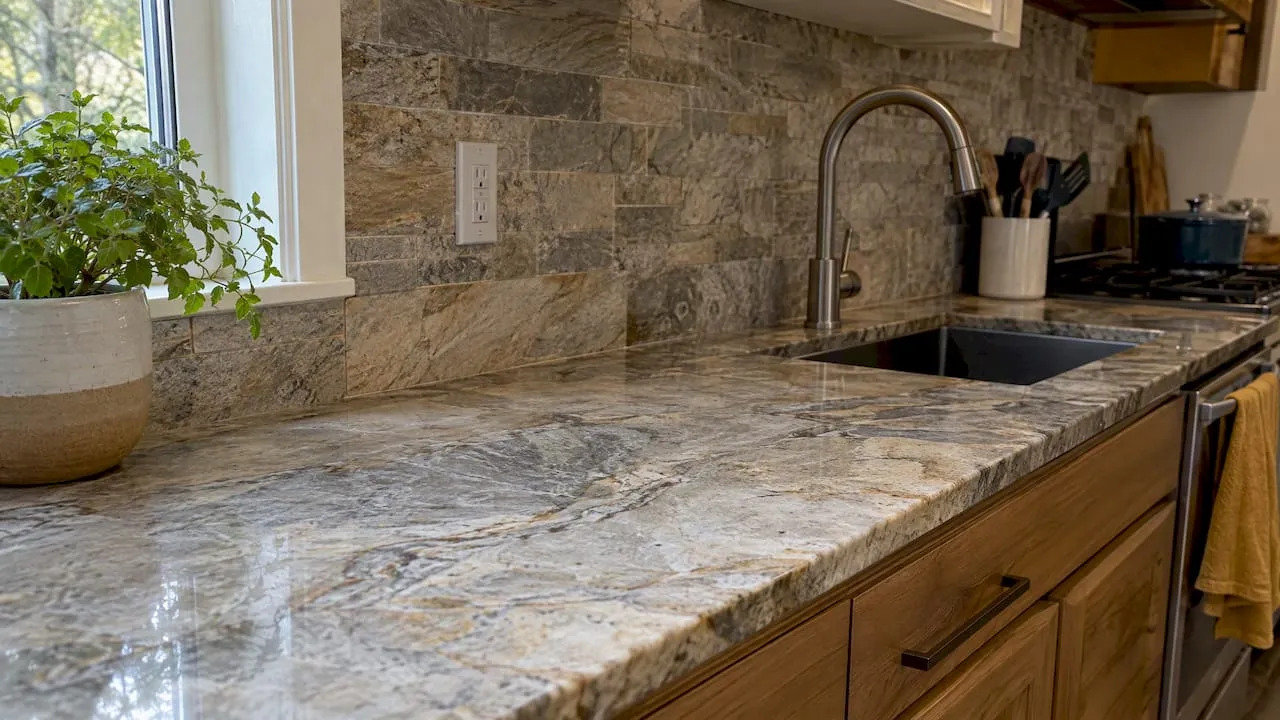
The design idea behind it, reported from NKBA material by a Florida design firm, is the move from a stark showpiece kitchen to one that feels like a continuation of the living space. Cabinets look like furniture. Stone, wood and tile are layered. The goal is calm, not perfection.
A few things we would tell any homeowner choosing surfaces:
- Pick for how you cook. A honed finish hides fingerprints but can show oil. A polished slab cleans easily but shows scratches in strong light.
- Check the slab in person. Natural stone varies from one slab to the next.
- Match the floor to the plan. Hardwood, luxury vinyl plank and tile each handle kitchen wear differently, and the subfloor decides what is possible. Floor removal and surface preparation should be priced into the plan, not discovered mid-project.
Defined zones instead of one big open room
Open-concept layouts are not disappearing, but 2026 design leans toward defined zones: a cooking area, a prep area, a drink or coffee station, a homework corner. Industry data cited by a cabinet maker says 52% of renovating homeowners change their kitchen layout, and 68% of those keep the same overall home footprint. The work is smarter rearranging, not adding square feet.
That has a real consequence in Washington. A Seattle-area architecture firm explains that an addition puts you on the full construction permit track with plan review, structural drawings and energy code compliance. The same firm notes that changes that expand the building can trigger insulation and envelope requirements under the state energy code, which adds soft costs. Keeping the footprint is often the cheapest way to get a better kitchen.
If you are unsure whether to open the kitchen up or keep it closed, we wrote a separate guide on open versus closed kitchens in Redmond homes that looks at the hidden systems (ducting, plumbing, structure) behind the decision. For smaller footprints, our small kitchen remodel budget lanes show where the money does the most.
Storage and aging-in-place planning
This is the trend we would pay for first. Houzz reports that 53% of 2026 renovators are addressing long-term needs, and 52% of them are planning for needs five or more years away (Houzz). The features are practical for everyone: pullout cabinets, drawers in place of lower doors, better task lighting.
The cost logic is simple. Drawer lowers, lever-style hardware and zero-threshold transitions are far easier to build in during the initial cabinet order than to retrofit, a point made in a kitchen trends guide from a New Jersey firm. Decide at the planning stage, not after the boxes arrive.
A short checklist for the planning meeting:
- Drawers for pots, pans and dishes in the lower run
- Lever or large-grip pulls instead of small knobs
- Task lighting under the uppers and over the sink
- Flat transitions between the kitchen and adjacent floors
- A pantry that uses pullouts instead of deep shelves
The same thinking applies in the bathroom, where blocking in the walls and shower slope matter more than finishes. See our guide on aging in place in the bathroom.
Technology that disappears into the house
Smart tech is growing up. Industry analysts describe the 2026 priority as automation that reduces friction instead of flashy standalone screens. In a kitchen that means appliances and systems that improve safety, energy management and ease of use: smart ventilation, leak detection, and controls that work from the device you already carry.
Our view: spend on the invisible stuff. A good range hood that clears air quietly and a leak sensor under the sink are worth more than a refrigerator with a screen you will stop using. If you are weighing a remodel against moving, a local Seattle home valuation can show how much a finished kitchen may matter to your home’s value.
Bathroom trends that pair with the kitchen
Many Redmond remodels cover both rooms, so it helps to see the bathroom direction too. The NKBA’s 2026 Bath Trends Report, based on a survey of nearly 700 industry experts, points to these themes:
- Timeless design. Transitional or timeless style leads, named by 70% of respondents as popular over the next three years. Organic or natural follows at 65%, and contemporary or minimalist at 57%.
- Fewer grout lines. Homeowners want smaller or no grout lines, which means large-format tile and slab-style walls that are easier to keep clean.
- Smart showers and lighting. Intelligent fixtures, lighting and energy systems are spreading.
- Wellness and aging in place. Stress-reduction features and accessibility are becoming mainstream.
For shower design, that adds up to a curbless entry, large-format tile, a niche instead of a shelf, and good lighting. Tile work is where the quality of the installer shows, so ask to see finished showers, not only photos of products.
What a 2026 kitchen remodel costs in Redmond
We do not publish fixed prices because every project depends on the house, so we quote after seeing the space. For context, a local guide to Seattle-area kitchen remodel costs gives these ranges for Redmond in 2026:
| Project type | Typical range | What it assumes |
|---|---|---|
| Mid-range remodel | $58,000 to $110,000 | Semi-custom cabinets, quartz counters, new appliances, no structural changes |
| Addition or major structural change | $200,000 to $500,000+ | Architectural fees, permits and Washington sales tax of 10.4% included |
Those are third-party estimates, not our prices. They do show the rule that matters: structure drives cost. Wood cabinets, stone counters and a layout with defined zones are all achievable inside the first range if you keep walls where they are.
Where to spend and where to save
- Spend on cabinet construction and storage planning, ventilation, lighting and flooring prep. You live with these daily.
- Save on trend-driven decor: color accents, hardware, stools and small appliances that are easy to swap.
- Avoid moving plumbing and walls unless the layout truly fails. If it does, plan for permits early.
Our perspective: plan the kitchen for the next 15 years
At Solution Team Remodeling, we see trend lists as a menu, not an order. A kitchen should look current, but more importantly it should work for your household and fit the house it lives in.
Our approach starts with planning. We walk through how you cook, who uses the room, and what is behind the walls before we talk finishes. We believe in honest pricing without pressure, clear communication and a schedule we can keep. That is how remodels stay organized and clean, and it is why we bring material guidance into the plan early instead of leaving you alone at the showroom.
Our honest take on 2026: choose warm wood or a natural palette if it feels like you, build in the storage and accessibility details now, and put your budget into the things behind the surface. Trends will move on. A well-planned, well-built kitchen will not.
— Vlad
Plan your Redmond kitchen with us
If you are ready to turn these ideas into a real plan, we offer kitchen, bathroom, interior and whole-home remodeling in Redmond and nearby, along with flooring, tile, trim, door and window installation. You can browse recent work in our Redmond renovation portfolio, then request a free estimate and consultation. We are licensed and insured, and we will tell you plainly which trends suit your house and which ones to skip.
FAQ
Are white kitchens out in 2026?
No. White is still a very popular choice, at 28% in the Houzz study. It has simply been overtaken by wood at 29%. If you like white, pair it with warm hardware, texture or a wood island so it feels current.
What kitchen color is trending in 2026?
Neutrals lead, with 96% of NKBA design pros naming them most popular, followed by greens and blues. Wood tones, especially white oak and walnut, are the stronger story this year.
Should I change my kitchen layout in a remodel?
Only if the current layout fails you. Most homeowners who change layouts keep the same home footprint, and staying inside existing walls usually avoids permit and energy-code costs tied to additions. A planning visit can tell you what is behind the walls before you commit.
What bathroom trends should I follow in 2026?
Timeless or natural styling, large tile with fewer grout lines, smart lighting and showers, and accessibility features. These last well and are easy to live with.
Sources
- 10 Kitchen Remodeling Trends to Know for 2026, Houzz
- Painted Kitchen Cabinet Colors Are Heading Out of Style, The Kitchn
- Furniture-Style Kitchens, KBF Design Gallery
- 2026 East Coast Kitchen Trends, Lighthouse Cabinetry
- Kitchen Addition Architect on Seattle’s Eastside
- Kitchen Trends 2026 NJ
- Kitchen & Bath Trends 2026, Draper DNA
- NKBA | KBIS Releases Annual 2026 Bath Trends Report
- Kitchen Remodel Cost Seattle 2026
